Home / Egyptian Culture / Ta'ameya
Ta'ameyaطعمية
Egypt's original falafel — fried fritters of fava beans and fresh green herbs.الفلافل المصرية الأصلية — أقراص مقلية من الفول والأعشاب الخضراء الطازجة.
Home / Egyptian Culture / Ta'ameya
Egypt's original falafel — fried fritters of fava beans and fresh green herbs.الفلافل المصرية الأصلية — أقراص مقلية من الفول والأعشاب الخضراء الطازجة.
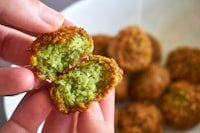
Ta'ameya is Egypt's beloved falafel — crisp golden fritters with a bright-green, herb-flecked centre. The crucial difference from the falafel known elsewhere is the bean: ta'ameya is made from fava beans, not chickpeas, which gives it a lighter, fluffier, greener interior. Widely believed to be the original falafel, it is one of Egypt's great street foods and a breakfast staple eaten across every social class.
الطعمية هي فلافل مصر المحبوبة — أقراص ذهبية مقرمشة بقلب أخضر زاهٍ مرصّع بالأعشاب. والفرق الجوهري عن الفلافل المعروفة في أماكن أخرى هو الحبّة: تُصنع الطعمية من الفول لا الحمّص، ما يمنحها قلبًا أخفّ وأكثر هشاشةً وخضرة. ويُعتقد على نطاق واسع أنها الفلافل الأصلية، وهي من أعظم أكلات الشارع في مصر وركن أساسي في الإفطار لدى كل الطبقات.
What Sets It Apart · ما يميّزها
The one swap that makes ta’ameya itself.التبديل الوحيد الذي يصنع الطعمية.
Most falafel in the world is made from chickpeas. Egyptian ta'ameya is made from dried, skinned fava beans, blended with a generous handful of fresh herbs — coriander, parsley, dill — plus onion, leek, garlic, and spices. The result is lighter and moister than chickpea falafel, with a distinctive vivid-green interior. The patties are often pressed with a special scoop, sprinkled with sesame seeds, and deep-fried until the outside is crisp and golden. The very name comes from the Arabic ta'am ("food") — roughly, "a little bite of food."
Origins · الأصول
A Coptic Lenten food that travelled the world.طعام صيام قبطي جاب العالم.
Food historians widely point to Egypt as the birthplace of falafel, with ta'ameya as its earliest form. A popular theory holds that it was created by Coptic Christians as a hearty meat-free food for the long fasts of Lent, perhaps around a thousand years ago; others trace bean-fritters all the way back to the Pharaohs. As the dish spread north into the Levant, cooks swapped fava beans for chickpeas, and that version became the falafel known worldwide. One charming etymology derives the word "falafel" from the Coptic pha la phel — "of many beans."
How It’s Eaten · كيف تُؤكل
Best with ful, in a warm baladi sandwich.الأفضل مع الفول، في ساندويتش بلدي دافئ.
Ta'ameya is classic breakfast food, and its natural partner is ful medames — together they make ful wa ta'ameya, the quintessential Egyptian morning meal. It's most often eaten stuffed into aish baladi (Egyptian flatbread) with tahini sauce, fresh tomato and cucumber, and pickles, or served on a plate as part of a spread. Sold hot from street stalls and corner shops all day long, it's cheap, filling, and entirely vegan — food that crosses every line in Egyptian society.
Quick Facts · حقائق سريعة